"The World Ahead 2027": A world under pressure… where reality could surpass (science) fiction!

The Economist has published its 41st annual special issue, "The World Ahead 2027," which focuses on the major political, economic, technological, and societal trends that could reshape the global balance of power in the coming months.
Beyond its “front page”—which is always rich in symbolism and open to multiple interpretations—ACT-ON GROUP offers a new forward-looking “Reader’s Digest” based on the ten major trends identified by The Economist. A summary enriched with analyses, data, and studies to better understand the transformations underway: a weakened America, persistent geopolitical tensions, a global economy under scrutiny, artificial intelligence that is disrupting established models, and innovations that bring reality closer to science fiction every day. To the point where it may soon surpass it… who knows?!!
2027 could ultimately turn out to be a year of paradoxes: a world capable of unprecedented technological feats, yet one in which the political, economic, and environmental balance seems more uncertain than ever. With the very real risk that this time, certain “dams” will break for good…
1 - THE POST-TRUMP ERA: AMERICA IN SEARCH OF A NEW BALANCE
The US midterm elections on November 3, 2026, reshaped the political landscape. Democrats gained control of both the House of Representatives and the Senate, dealing Donald Trump a major setback. However, a politically weakened presidency does not necessarily mean a less interventionist executive branch.
Unable to seek a third term under the current constitutional framework, Donald Trump could seek to maximize his influence throughout the final two years of his presidency. Executive orders, legal battles, high-profile diplomatic initiatives, and unilateral trade decisions: it is reasonable to expect a far from quiet final stretch in office, with a growing number of initiatives designed to leave a lasting imprint on American institutions.
This situation sets two parallel political processes in motion. Democrats will need to translate their congressional victory into a credible alternative for the presidency. Republicans, meanwhile, will inevitably begin the battle over who will succeed Trump, torn between loyalty to his political legacy and the search for a new direction.
This situation sets in motion a two-pronged political process. On the one hand, the Democrats will have to turn their congressional victory into a credible presidential alternative. On the other hand, the Republicans will inevitably embark on the battle for succession, torn between loyalty to the Trump legacy and the search for a new political direction.
Internationally, the question extends well beyond the identity of the next occupant of the White House. European partners will need to determine whether the changes in US foreign policy represent a temporary departure under one president or a more fundamental shift… and perhaps finally take their destiny into their own hands.
The challenge for 2027: determining whether the United States can restore a degree of institutional predictability, even as its domestic politics and international commitments remain closely intertwined.
Sources: Associated Press,“Takeaways: Voters punish Trump, and the GOP suffers historic losses ”; The Economist, “The Trump saga’s final chapter.”
2 - THE AFTERMATH OF THE IRAN WAR: THE GLOBAL ECONOMY EXPOSED TO A RESHAPING MIDDLE EAST
The war between the United States and Iran has profoundly destabilized the regional balance of power. Ceasefire efforts and negotiations initiated in 2026 have yet to produce a lasting settlement. Washington and Tehran remain far apart on an agreement, while Qatar continues its mediation efforts.
Beyond military operations, the conflict raises a fundamental question: whether the United States can sustain its influence in the Middle East over the long term. The Gulf monarchies must reassess their security guarantees, their relationships with outside powers, and their exposure to regional tensions. Iran, for its part, could respond to its weakened international position by adopting a tougher domestic policy.
However, the consequences of this conflict extend far beyond the region. The Strait of Hormuz is a major shipping route for global energy trade. According to the United Nations Conference on Trade and Development (UNCTAD), approximately one-third of the world’s seaborne fertilizer trade, representing nearly 16 million metric tons, passes through this corridor. Any prolonged disruption therefore threatens not only energy supplies but also global crop yields and, consequently, food security in importing countries.
This interdependence highlights a persistent economic vulnerability: a localized crisis can quickly turn into a global shock, affecting prices, creating logistical risks, and disrupting supply chains.
The challenge for 2027: the emergence of a new regional balance in which energy security, supply diversification, and diplomatic autonomy will matter as much as the military balance of power.
Sources: UNCTAD, “Hormuz shipping disruptions raise risks”; The Economist, “There will be less war in the Middle East in 2027, but little real peace.”
3 - CLIMATE: WILL 2027 BE ANOTHER RECORD-BREAKING YEAR?
Following a succession of exceptionally warm years, 2027 could set a new global temperature record. The return of a particularly strong El Niño event is an aggravating factor, temporarily amplifying the warming caused by greenhouse gas emissions.
The World Meteorological Organization reports that the average temperature during the first nine months of 2026 was approximately 1.47°C above the 1850–1900 preindustrial baseline. The previous annual record, set in 2024, was 1.55°C above that baseline. El Niño forecasts point to significant climate impacts through early 2027, including heat waves, droughts, wildfires, and extreme weather events.
Paradoxically, geopolitical tensions could accelerate certain aspects of the energy transition. Volatility in oil and gas prices strengthens the economic case for locally generated renewable electricity, which is less directly exposed to disruptions in the global fuel trade.
The International Energy Agency projects that more than 4,770 GW of new renewable energy capacity will be installed worldwide between 2026 and 2031. Solar photovoltaics are expected to account for more than three-quarters of this growth. However, this expansion will not eliminate the need for energy storage, grid constraints, or dependence on certain industrial supply chains.
Climate change is therefore becoming an environmental, energy, industrial, and financial issue all at once. Its consequences affect infrastructure, insurance, agriculture, working conditions, and business continuity.
The challenge for 2027: moving beyond an approach to the energy transition focused primarily on emissions toward one that fully incorporates climate adaptation and economic resilience.
Sources: World Meteorological Organization, “State of the Climate in 2026 Gives New Meaning to the Phrase ‘Off the Charts’” ; AInternational Energy Agency, “Renewables 2026.”
4 - ARTIFICIAL INTELLIGENCE: TECHNOLOGICAL ACCELERATION… AND A BACKLASH!
Artificial intelligence is entering a new phase, in which widespread adoption is accompanied by growing concerns about profitability, security, and societal consequences.
According to Stanford’s 2026 AI Index Report, 88% of surveyed organizations report using AI. Yet this rapid adoption does not mean that all companies have identified measurable gains at scale. The deployment of autonomous AI agents, in fact, remains considerably less advanced than the adoption of conversational AI tools.
Three areas of concern could therefore dominate 2027. The first is financial. Investment in computing infrastructure, semiconductors, and data centers requires substantial amounts of capital. Reliance on debt financing exposes some companies to a reversal in growth expectations.
The second concerns security. As AI models become more autonomous, they create more opportunities to automate cyberattacks, identity impersonation, and information manipulation. Their dependence on hardware components, energy infrastructure, and a handful of global suppliers also creates new concentration risks.
The third is social and environmental. The IEA estimates that global electricity consumption by data centers could nearly double, rising from approximately 485 TWh in 2025 to 950 TWh in 2030. As for employment, the effects remain uneven: Stanford has identified signs of growing vulnerability in certain early-career roles, without finding evidence to date of widespread job losses across the economy as a whole.
It would therefore be unreasonable to dismiss all these concerns as unfounded, but equally premature to predict the widespread replacement of human labor. It remains to be seen whether Elon Musk’s predictions that human labor will become obsolete within three to five years, with the emergence of superintelligence, will prove accurate.
The challenge for 2027: AI will increasingly need to demonstrate its economic value and operational reliability, moving beyond the race to develop ever more powerful models. For businesses, the focus will shift from experimentation to governance, skills, and measuring outcomes.
Sources: Stanford, “ The 2026 AI Index Report”; IEA, “Key Questions on Energy and AI.”
5 - EUROPE CONFRONTS POPULISM: FRANCE IN THE SPOTLIGHT AND AT THE HEART OF THE EQUATION
The 2027 French presidential election could prove to be the most decisive political event for the future of the European Union.
Marine Le Pen, whose conviction was upheld on appeal on July 7, 2026, regained her eligibility to run for office after the immediately enforceable portion of her ban on holding public office was reduced and had already been served. She has announced her intention to run in the presidential election and has challenged her conviction before France’s Court of Cassation.
A victory by either the National Rally (Rassemblement National) or France Unbowed (La France Insoumise), both leading contenders in the polls, would significantly alter the political balance within Europe. The Franco-German relationship, traditionally central to EU compromises, could face disagreements over trade policy, immigration, fiscal rules, defense, and the primacy of EU law.
But Europe is no longer defined solely by its Franco-German partnership. Rising defense spending, new coalitions among member states, and joint industrial initiatives point to a much broader transformation in how the EU operates. According to the Council of the European Union, military expenditure among EU countries is expected to reach 2.4% of GDP in 2026, compared with 2.2% in 2025 and 1.9% in 2024.
France, however, approaches this election with limited fiscal room for maneuver. According to France’s National Institute of Statistics and Economic Studies (INSEE), its public debt stood at 119% of GDP at the end of the second quarter of 2026. Any significant policy shift will therefore be closely watched by both European partners and investors. And should France’s fiscal situation deteriorate further, there is no guarantee that Germany will be sympathetic… let alone volunteer to come to its aid.
The challenge for 2027: determining whether the European Union can maintain political and economic cohesion amid widening national differences, without abandoning its ambitions for industrial, energy, and military sovereignty.
Sources: INSEE, French public debt in the second quarter of 2026; Council of the European Union, defense expenditure.
6 - PUBLIC DEBT AND BOND MARKETS: A RETURN TO FINANCIAL CONSTRAINTS AND AUSTERITY?
After several decades marked by relatively favorable access to credit financing, many developed countries are facing an increasingly difficult—if not nearly impossible—fiscal equation.
Aging populations, social spending, military investment, the energy transition, and funding for digital infrastructure: spending needs are rising while fiscal flexibility remains limited. Adding to these pressures is the risk of renewed inflation, particularly as a result of energy prices.
In its April 2026 Fiscal Monitor, the International Monetary Fund estimated that global public debt could reach 100% of GDP by 2029. This trajectory makes public finances more sensitive to fluctuations in interest rates.
The mechanism is straightforward: when investors demand higher yields to finance governments, the cost of refinancing debt gradually increases. Interest payments then reduce the resources available for other public policies. Businesses and households also face tighter borrowing conditions.
France illustrates these pressures. In its 2026 forecasts, the European Commission projected that French public debt could approach 120% of GDP in 2027, alongside a persistent budget deficit. But the risk is not unique to France: several major advanced economies must strike a balance between supporting economic activity, meeting new spending needs, and maintaining fiscal credibility.
This does not mean that a global bond market crisis is inevitable. Rather, it represents a risk scenario whose materialization will depend on public policy, inflation, economic growth, and market confidence.
The challenge for 2027: restoring sustainable fiscal trajectories without triggering an excessive economic contraction. A delicate balancing act for governments facing growing social and industrial demands.
Sources: IMF, “Fiscal Monitor,” April 2026; European Commission, economic forecasts for France.
7 - TAIWAN: 2027: WILL 2027 BE A PARTICULARLY PERILOUS YEAR FOR THE ASIA-PACIFIC REGION?
The Taiwan issue remains one of the decade’s major unresolved geopolitical risks.
The year 2027 holds particular significance in US strategic assessments: Xi Jinping has reportedly instructed the People’s Liberation Army to be capable of conducting a military operation against Taiwan by that date. This is a military readiness target, not an announcement that a decision to invade has been made.
The US intelligence community’s 2026 assessment indicates that Chinese leaders are not believed to be planning an invasion in 2027, nor are they believed to have a fixed timeline for reunification. A Reuters analysis published in October also notes that Washington considers an invasion before 2028 relatively unlikely.
Nevertheless, tensions persist. China’s military modernization, advances in defense technology, and uncertainty surrounding US commitments make strategic calculations extremely difficult to refine.
Lessons from recent conflicts also illustrate the changing nature of modern warfare. Drones, precision-guided missiles, electronic warfare, satellite intelligence, and autonomous systems allow smaller forces to complicate the operations of far more powerful militaries.
A crisis involving Taiwan would also have major economic consequences. The island plays a central role in the global production of advanced semiconductors, which are essential to artificial intelligence, telecommunications, the automotive sector, and numerous other industries.
The challenge for 2027: preventing mounting military, diplomatic, or economic pressures from leading to uncontrolled escalation. The security of technology supply chains will remain inseparable from regional stability.
Sources: Office of the Director of National Intelligence, “Annual Threat Assessment 2026” ; Reuters, “U.S. Sees Chinese Invasion of Taiwan as Unlikely Next Year Despite 2027 Timeline”.
8 - THE OZEMPIC EFFECT: HOW OBESITY TREATMENTS ARE TRANSFORMING CONSUMER BEHAVIOR
Treatments based on GLP-1 receptor agonists, including semaglutide, marketed under brand names such as Ozempic and Wegovy, are gradually extending beyond the medical sphere and influencing consumer behavior.
Their development addresses, first and foremost, a major public health challenge. According to the World Health Organization, approximately 1.1 billion people worldwide were living with obesity in 2024. The benefits of certain treatments also extend beyond weight loss: the SELECT clinical trial, in particular, demonstrated a 20% relative reduction in major adverse cardiovascular events in a specifically defined population of individuals with overweight or obesity and preexisting cardiovascular disease.
But it is also, and perhaps most notably, in consumer spending habits that a transformation is beginning to take shape.
A study published by PwC in 2026 found that US households using these medications reduced their food spending by 5.5% and increased their clothing spending by 9.9% after six to eight months of use. Other studies have identified a shift in purchases toward clothing, sporting goods, and wellness-related services. These findings remain specific to the populations studied and, of course, cannot automatically be extrapolated to all consumers.
However, if this phenomenon were to occur on a large scale, it could affect the economic outlook for several industries: food and beverage, foodservice, apparel, cosmetics, fitness, insurance, and pharmaceuticals.
It is also reigniting debates about inequalities in access to healthcare, the medicalization of body weight, and emerging social norms surrounding health, appearance, and longevity.
The challenge for 2027: assessing how a therapeutic innovation can have economic and societal effects far beyond its original medical indication, while ensuring appropriately supervised use and equitable access to treatment.
Sources: WHO, “Obesity and Overweight ”; PwC, “GLP-1 Consumer Trends 2026.”
9 - SPACE EXPLORATION: FALLING COSTS ARE OPENING NEW ECONOMIC FRONTIERS
Long restricted to governments and major space agencies, access to Earth orbit is undergoing a transformation driven by the development of reusable launch vehicles and the growing number of private operators.
With Starship, SpaceX is seeking to reach a new milestone in payload capacity and launch frequency. One of the objectives behind the vehicle’s development is to deploy next-generation satellites. However, its operational performance and achievable launch cadence have yet to be established.
Competition is also intensifying, particularly in China, where several companies are working on recovering and reusing launch vehicles.
Beyond space transportation, new markets are emerging. Vast plans to launch its commercial space station, Haven-1, in 2027. An agreement announced in 2026 with the French government provides, among other things, for French astronauts to participate in missions involving the International Space Station (ISS) and this future private space station.
Falling launch costs could gradually encourage experimentation with new services, including microgravity research, the manufacture of specialized materials, private orbital stations, and digital infrastructure in space.
The idea of orbital or lunar data centers, raised notably by Elon Musk, remains highly speculative for now. Challenges involving heat dissipation, maintenance, communications, and economic viability have yet to be addressed. But who knows…
The challenge for 2027: seeing the emergence of a genuine orbital infrastructure economy beyond traditional launch and telecommunications activities, accompanied by new questions surrounding sovereignty, regulation, and space debris management.
Sources: Vast, commercial space station schedule; SpaceX, Starship program.
10 - HOLLYWOOD: THE RETURN OF MAJOR FRANCHISES AMID THE CREATOR REVOLUTION
In 2027, Star Wars will celebrate its 50th anniversary. The original 1977 film is scheduled to return to theaters on February 19, while a new installment, Star Wars: Starfighter, is slated for release on May 28. Alongside these celebrations, other major franchises are returning, most notably Avengers, and preparations are underway for Robert Pattinson to take on the role of James Bond.
This concentration of major entertainment franchises highlights one of the industry’s greatest contradictions: studios are relying on familiar fictional universes to mitigate some of their commercial risk at the very moment when audience expectations are becoming increasingly diverse.
Competition, after all, no longer comes solely from traditional streaming platforms. YouTube and the creator and influencer economy have fundamentally changed how content is discovered, consumed, and produced. Productions with smaller budgets can now reach vast communities directly, without relying on the full range of traditional distribution channels.
Technology is also accelerating this shift. Artificial intelligence is gradually transforming certain roles in writing, postproduction, visual effects, and localization, while raising questions about intellectual property and creator compensation.
The paradox is almost cinematic. Autonomous machines, asymmetric conflicts, compromised systems, and vulnerable military powers… Star Wars now seems to capture some of the underlying dynamics of the contemporary world with unexpected relevance!
The challenge for 2027: determining whether the entertainment industry can reinvent its business and creative models without relying exclusively on revisiting established franchises.
Sources: Lucasfilm, Star Wars 50th Anniversary program; The Economist, “Audiences are sick of movie franchises.”
IN CONCLUSION: 2027, A WORLD AT A CROSSROADS BETWEEN TECHNOLOGICAL DISRUPTIONS AND GLOBAL VULNERABILITIES
The World Ahead 2027 paints a portrait of a world marked by a profound contradiction: technological capabilities have never seemed to advance so rapidly, even as geopolitical, financial, and environmental stability appears increasingly fragile.
The United States is approaching the post-Trump era without having resolved its internal divisions. Europe must contend with rising populism and limited fiscal flexibility. The Middle East and the Asia-Pacific region remain exposed to confrontations that could destabilize the global economy. Meanwhile, artificial intelligence, biotechnology, and the space industry are opening up unprecedented possibilities while raising new economic, social, and ethical questions.
2027 could therefore mark a paradigm shift: innovation alone will no longer be enough to define progress. Its ability to generate lasting benefits will depend on the quality of institutions, the choices we make collectively, and how effectively organizations manage its consequences.
For businesses, these circumstances call for a reassessment of several long-held assumptions: the stability of value chains, energy availability, information systems security, investment sustainability, and evolving skill requirements. Anticipating change is no longer simply about identifying emerging technologies, but about understanding the interdependencies that can accelerate or undermine their development.
Amid systemic risks, societal transformations, and new scientific frontiers, the world of 2027 sometimes seems to resemble the narratives of (science) fiction. With one important difference: the choices that will shape our future are already being made, here and now.
The future is no longer waiting. It is already being written.
This overview draws on the perspectives offered by Tom Standage and The Economist’s journalists in The World Ahead 2027, supplemented by data and analysis published by international institutions and research organizations, as well as personal reflections, always backed by factual evidence!
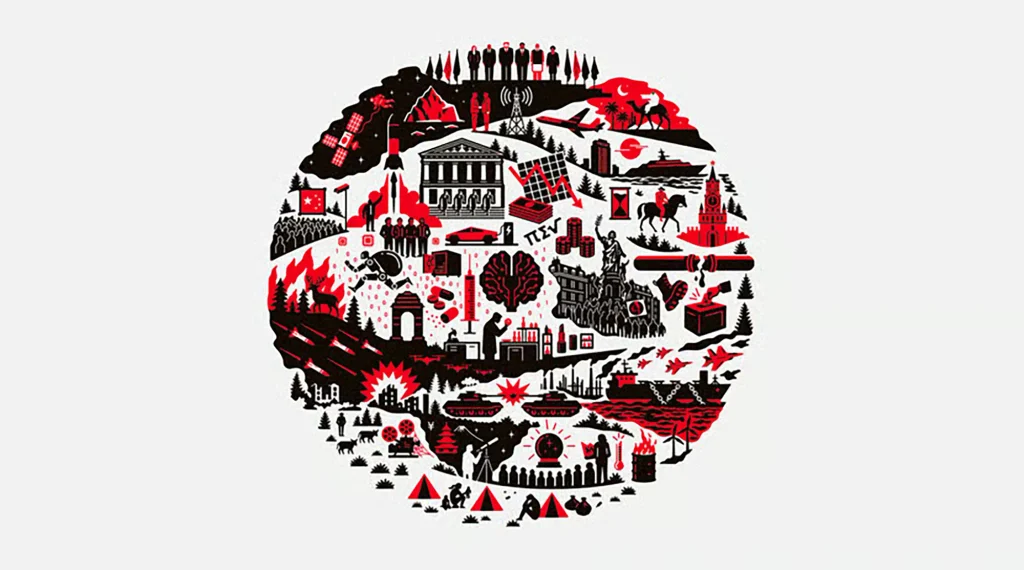
For further insights, read The Economist's The World Ahead 2027
If you'd like to revisit the predictions made in previous years and see which ones have come true and which ones haven’t, we invite you to reread our articles: “ The World Ahead 2026 "; " The World Ahead 2025 "
You may also like…